Get free delivery on orders over $100
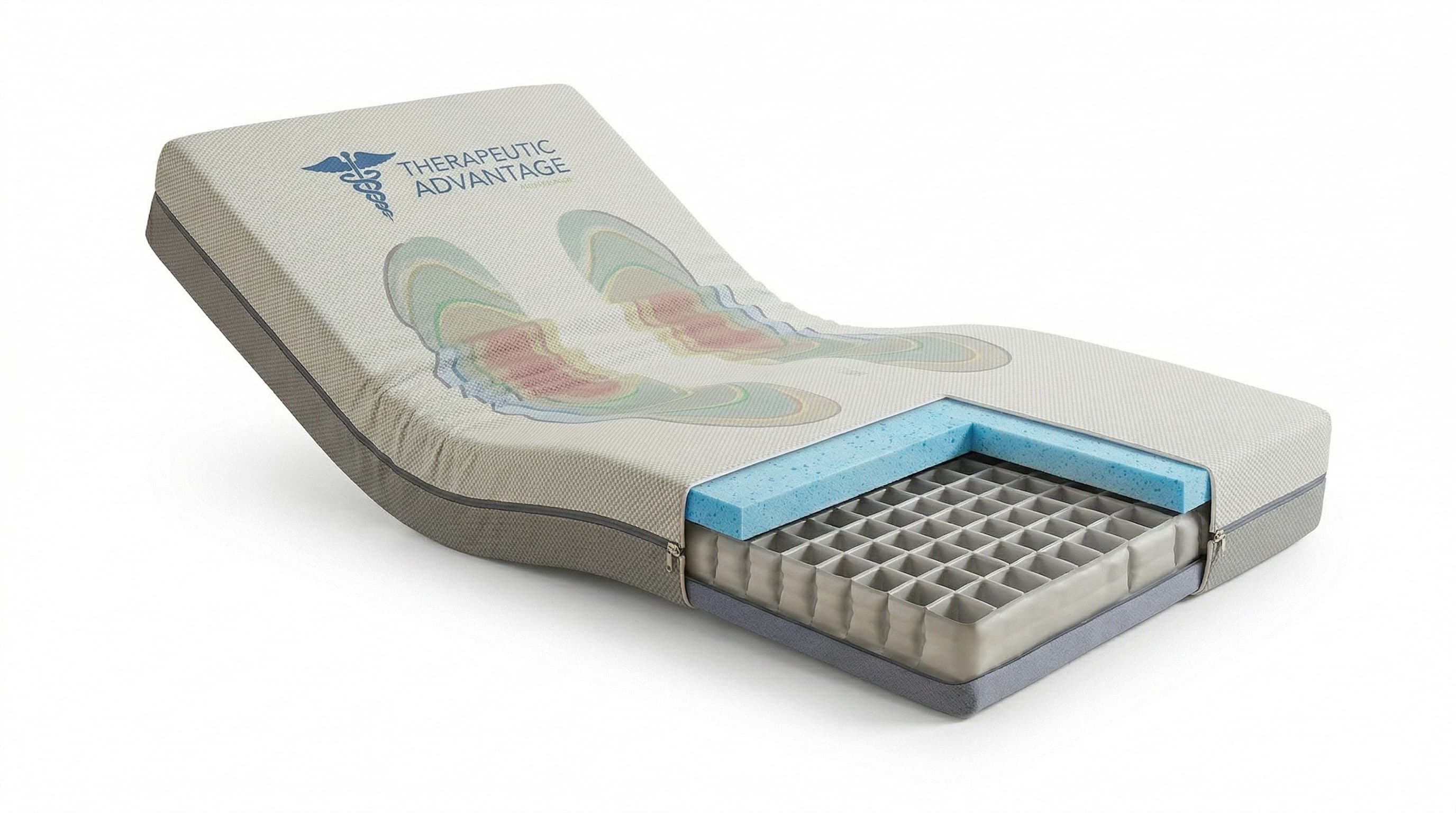
Therapeutic Mattresses
Therapeutic mattresses engineered for clinical-grade skin protection and restorative sleep. Whether you need an alternating pressure system to prevent pressure sores or a high-density memory foam surface for superior spinal alignment, these mattresses are designed to integrate with any home-care bed frame. From low-air-loss technology for moisture control to reinforced perimeter borders for safer transfers, each mattress is selected for its durability and its ability to provide honest, pain-relieving support.
Filter Your Results:
0 resultsA hospital bed frame adjusts position. The mattress is what determines comfort, skin health, and sleep quality for the person spending hours in that bed every day. Choosing the wrong mattress can lead to pressure injuries, poor circulation, and restless nights. Choosing the right one can prevent all of that.
This guide covers every major type of hospital bed mattress, from standard replacements to advanced therapeutic surfaces, so you can match the mattress to the level of care that is actually needed.
Choosing the Right Mattress by Care Need
The fastest way to narrow down your options is to match the mattress type to the person's risk level and daily situation.
Low risk — independent and mobile in bed. The person can shift their own weight, get in and out of bed with minimal help, and does not have any existing skin breakdown. A quality innerspring or high-density foam mattress handles this well.
Moderate risk — limited mobility, spending 12+ hours in bed. The person has trouble repositioning independently, has fragile skin, or has a history of redness that does not resolve quickly. A pressure-relief mattress with gel, memory foam, or static air cells provides the added protection they need.
High risk — immobile or existing pressure injuries. The person cannot reposition at all, has active pressure injuries, or has conditions like diabetes or vascular disease that slow healing. An alternating pressure mattress or low air loss mattress is the appropriate choice here.
Bariatric needs. If the person weighs more than 350 pounds, the mattress must be rated for that weight regardless of risk level. A standard foam mattress will compress under higher loads and lose its pressure-redistribution properties.
If you are unsure about risk level, a healthcare provider can perform a quick assessment using a standardized scale like the Braden Scale. That score gives you a clear starting point.
Innerspring and Foam Hospital Bed Mattresses
Standard hospital bed mattresses are the workhorse of home care. They replace a worn-out original mattress or pair with a new bed frame, and they work well for people who are relatively mobile and do not have elevated skin breakdown risk.
Innerspring mattresses offer a familiar feel with coil support and a firm sleeping surface. They hold up well over time, provide good airflow through the coil structure, and are the most affordable option. The main limitation is pressure redistribution. Coils create defined pressure points, which is fine for someone who moves around in bed but not ideal for someone who stays in one position for long stretches.
High-density foam mattresses are the most common upgrade. They use multiple foam layers, typically with a firmer base for support and a softer top layer that conforms to the body and spreads pressure across a wider area. Look for mattresses with a density of at least 1.8 pounds per cubic foot in the base layer. Lower-density foam compresses faster and bottoms out under sustained weight.
Most standard hospital bed mattresses are 80 inches long, 36 inches wide, and 6 inches thick. Confirm those dimensions match your bed frame before ordering, especially if you have a bariatric or extra-long frame.
Pressure-Relief Mattresses
Pressure-relief mattresses go beyond standard foam by actively redistributing weight across the entire sleeping surface. They are designed for people who spend extended time in bed and need more protection against pressure injuries than a basic foam mattress can provide.
Gel-infused foam mattresses embed gel particles or gel layers within the foam structure. The gel absorbs and disperses body heat while the foam conforms to the body's shape. This combination keeps the surface cooler and reduces the concentrated pressure points that lead to skin breakdown.
Visco-elastic (memory foam) mattresses respond to body heat and weight by molding precisely to the person's contours. This creates a large contact area that distributes pressure evenly. Memory foam works well for people who tend to stay in one position, because it eliminates the high-pressure spots that develop at bony prominences like the sacrum, heels, and shoulder blades.
Static air mattresses use interconnected air cells that shift air between chambers as the person moves. Unlike alternating pressure systems, they do not require a pump or electricity. They are quiet, low-maintenance, and effective for moderate-risk users who want pressure redistribution without the complexity of a powered system.
Any of these options is a meaningful step up from a standard foam mattress for someone at moderate risk of pressure injuries.
Alternating Pressure Mattresses
Alternating pressure mattresses use rows of air cells connected to an electric pump. The pump inflates and deflates alternating sets of cells on a timed cycle, usually every five to ten minutes. This constant shifting means no single area of the body bears sustained pressure for long.
This technology is specifically designed for people who cannot reposition themselves. For someone who is immobile or has very limited mobility, an alternating pressure mattress simulates the natural weight shifting that a healthy person does unconsciously during sleep.
What to look for in an alternating pressure system:
- Cell size. Larger cells (8 inches or more) provide deeper pressure relief and are better for higher-risk users. Smaller cells (5 inches) work for moderate risk.
- Cycle time. Most systems alternate every 5 to 10 minutes. Some allow the caregiver to adjust the cycle based on the person's comfort and skin response.
- Static mode. Many systems offer a static mode that keeps all cells inflated at a set pressure. This is useful during transfers or when the person wants a stable surface for eating or reading.
- CPR valve. A rapid deflation valve allows the mattress to be flattened instantly in an emergency. This is a standard safety feature on quality systems.
Explore alternating pressure mattress options
Low Air Loss Mattresses
Low air loss mattresses push a continuous, gentle stream of air through tiny perforations in the mattress surface. This airflow serves two purposes: it manages moisture by wicking perspiration away from the skin, and it reduces heat buildup at the contact surface.
Moisture and heat are two of the biggest risk factors for pressure injury development and delayed healing. Skin that stays damp and warm breaks down faster and is more vulnerable to friction and shear forces. Low air loss technology addresses both issues simultaneously.
These mattresses are commonly recommended for people with existing pressure injuries (Stage II and above), incontinence-related skin concerns, or conditions that cause excessive perspiration. They are also used post-surgically for patients who will be on extended bed rest.
How low air loss differs from alternating pressure: Alternating pressure focuses on cycling pressure points. Low air loss focuses on the skin microclimate, meaning temperature and moisture at the surface. Some advanced mattress systems combine both technologies in a single unit, which provides the most comprehensive protection available for high-risk users.
Low air loss mattresses require a pump to maintain airflow, and the pump runs continuously while the mattress is in use. Power consumption is modest, and the airflow noise is typically a soft, steady hum rather than the cyclical sound of an alternating pressure system.
See low air loss mattress options and recommendations
Bariatric Mattresses
Standard hospital bed mattresses are designed for users up to about 350 pounds. Above that weight, the foam compresses too much, the pressure redistribution fails, and the mattress loses its therapeutic benefit. Bariatric mattresses solve this with denser foam, reinforced construction, and higher weight ratings.
Most bariatric mattresses support 600 to 1,000 pounds and come in widths of 42, 48, or 54 inches to match bariatric bed frames. The wider surface is not just about comfort. It gives the person room to shift position and gives caregivers better access for repositioning and wound care.
Construction typically involves a high-density foam base (2.0 pounds per cubic foot or higher) topped with a pressure-redistribution layer rated for the full weight capacity. Some bariatric mattresses incorporate gel or air cells for additional pressure management.
When selecting a bariatric mattress, make sure the weight rating matches or exceeds the bed frame's capacity. A 600-pound frame paired with a 450-pound mattress creates a weak link that defeats the purpose of the bariatric setup.
Mattress Overlays and Toppers
If the current mattress is in good condition but needs a boost in pressure relief, an overlay or topper can bridge the gap without replacing the entire mattress.
Foam overlays are 2 to 4 inches thick and sit directly on top of the existing mattress. Egg-crate foam is the most basic and least expensive option. It adds some surface variation but provides minimal true pressure redistribution. High-density convoluted foam overlays are more effective and hold their shape longer.
Gel overlays add a layer of gel pads on top of the mattress surface. They redistribute pressure and manage heat at the same time. These work well as a moderate-risk upgrade to a standard foam mattress.
Air overlays are essentially smaller versions of alternating pressure mattresses. They sit on top of the existing mattress and use a small pump to cycle air through cells. This is a cost-effective way to add alternating pressure therapy without replacing the base mattress.
Overlays are a practical option when the mattress is relatively new, the need is moderate, or the budget does not allow a full replacement right now. Keep in mind that an overlay adds height to the sleep surface, which can affect how easily the person gets in and out of bed. Check that the combined height still works safely with the bed frame's side rails and transfer setup.
Find the Right Therapeutic Mattress
The right hospital bed mattress depends on how much time the person spends in bed, how well they can move on their own, and whether they have any existing skin concerns. Start with the risk level, match it to the mattress type, and confirm the dimensions and weight capacity fit your bed frame.
If you need help figuring out which mattress is right for your situation, the Cerigra team is happy to walk you through the options. Call us at (945) 378-5255 or explore our full mattress selection online. We will help you find the right fit.
Talk to an Expert
Price Match Guarantee
Find it lower? We'll match it
HSA/FSA Eligible
Tax-free healthcare spending