Get free delivery on orders over $100
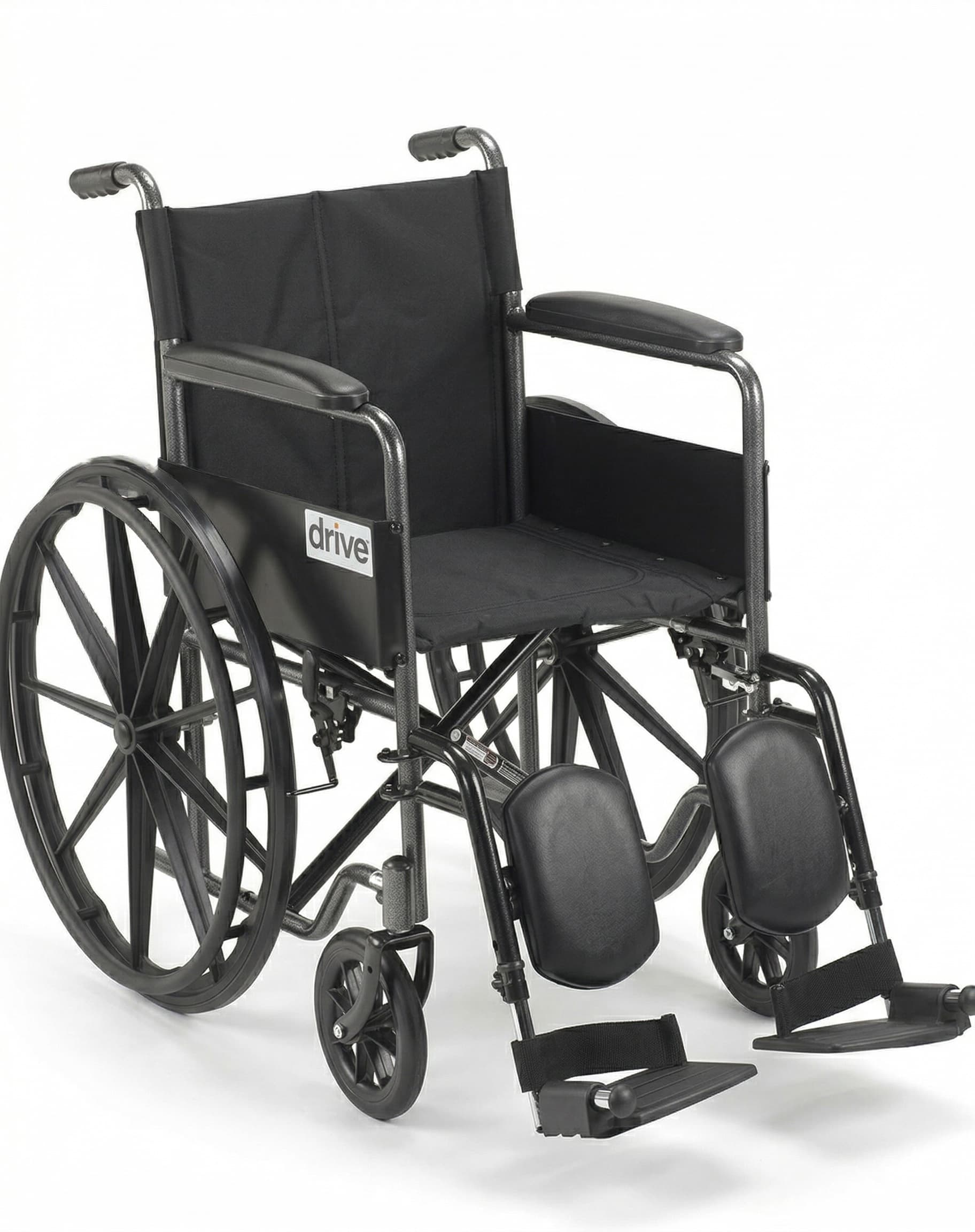
Power Wheelchairs
Wheelchairs designed for independence and daily comfort. Whether you are seeking a lightweight, foldable frame for travel or a high-performance power model for total autonomy, our selection is curated to integrate seamlessly into your lifestyle. From compact transport chairs to heavy-duty bariatric options, every wheelchair here is chosen for reliable support and dignity, not just utility.
Filter Your Results:
28 resultsA power wheelchair gives you independent mobility when walking is no longer practical and a manual wheelchair demands more upper body effort than you can sustain. Unlike a mobility scooter, a power wheelchair is controlled by a joystick (or alternative input device), operates in tight indoor spaces, and is built for people who spend most of their seated hours in the chair.
The range of available electric wheelchairs has expanded significantly in recent years. You can find compact folding models that fit in a car trunk alongside clinical-grade chairs with power tilt, recline, and seat elevation. The right choice depends on how you live -- where you go, how long you sit, what physical support you need, and whether you need to transport the chair regularly.
This guide covers the major categories of power wheelchairs, what to look for in each, and how to navigate pricing and Medicare coverage.
Choosing the Right Power Wheelchair
Start with your daily reality, not a feature list:
How much time will you spend in the chair? If the power wheelchair is your primary seating for most of the day, seat comfort, pressure relief, and positioning features matter as much as the drive system. If you use it mainly for trips outside the home, portability and range take priority.
Where will you use it? Indoor-focused users need a compact frame and tight turning radius. Outdoor users need larger drive wheels, better suspension, and longer battery range. Many people need both, which means finding the right compromise.
What are your physical support needs? Some riders need a basic seat and joystick. Others need head support, lateral trunk supports, elevating leg rests, tilt-in-space, or recline to manage pressure, posture, or respiratory needs. A power wheelchair can be configured far more precisely than a scooter.
Can you operate a standard joystick? Most power wheelchairs use a hand-operated joystick. If hand or arm function is limited, alternative controls exist -- head arrays, sip-and-puff systems, chin controls, or compact joysticks that require minimal force.
Will you transport it in a vehicle? Full-size power wheelchairs typically weigh 150-300+ pounds and require a vehicle lift or accessible van. Portable models weigh 40-70 pounds and fold to fit in a trunk.
Standard Power Wheelchairs
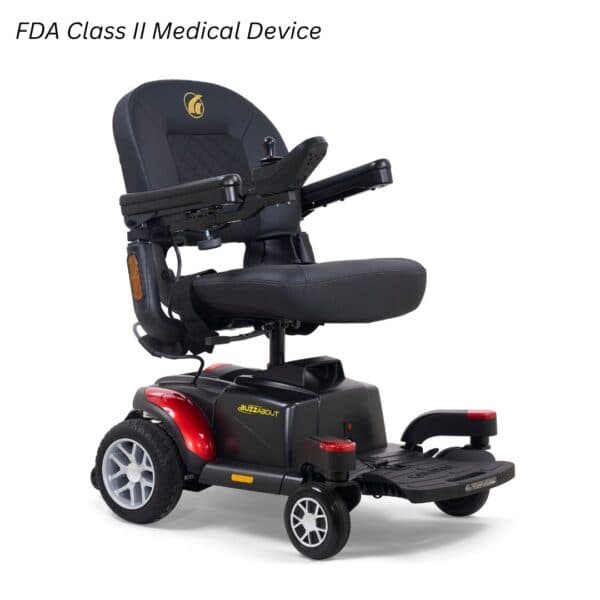
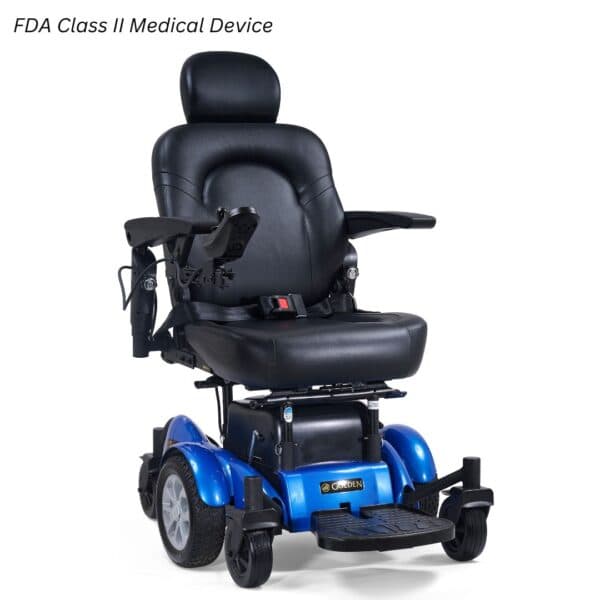
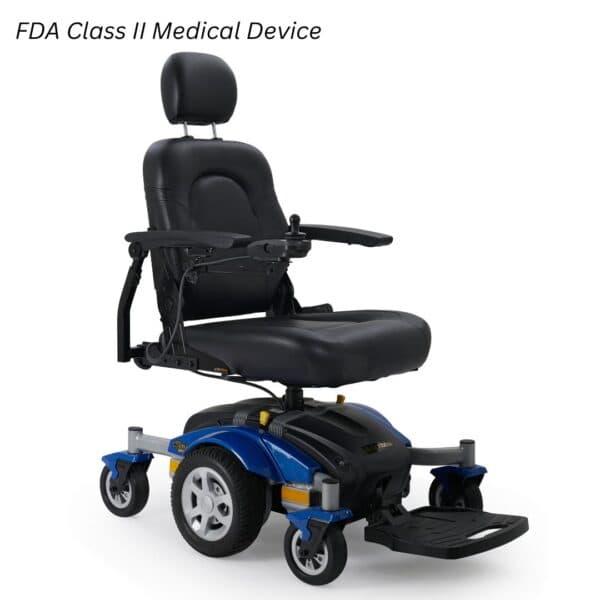
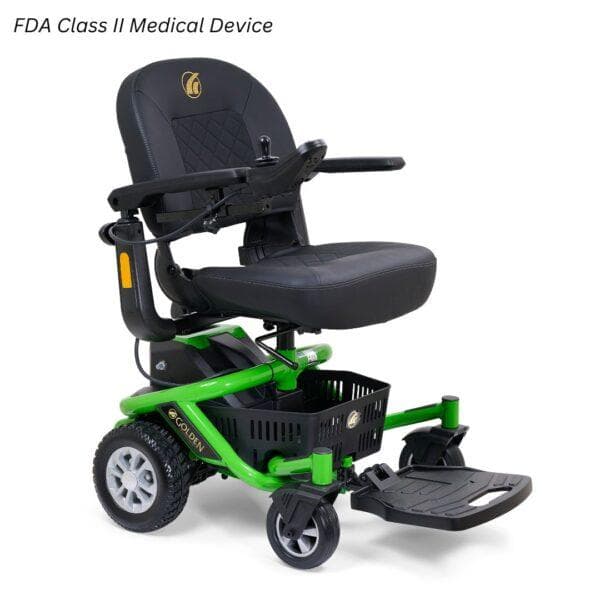
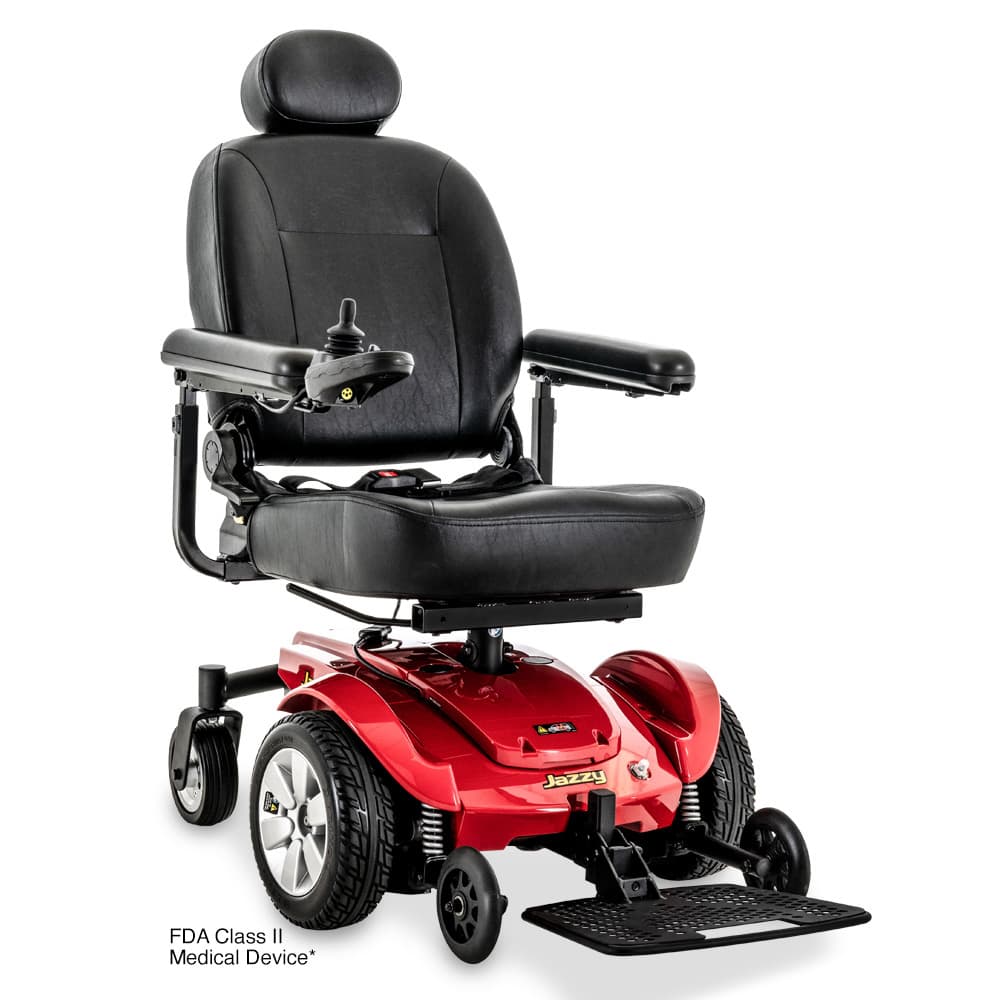
Standard power wheelchairs are the most common type for everyday indoor and outdoor use. They feature a captain's-style seat on a powered base with four or six wheels, controlled by a joystick mounted on the armrest.
What to expect:
- Weight capacity: Most standard models support 250-350 pounds.
- Speed: Typical top speed is 4-6 mph.
- Range: 10-20 miles per charge depending on battery size, terrain, and rider weight.
- Turning radius: Mid-wheel-drive designs offer the tightest turning radius (often under 22 inches), making them the best choice for navigating indoor spaces.
- Drive configurations: Front-wheel drive handles outdoor obstacles well. Mid-wheel drive excels indoors. Rear-wheel drive offers stable high-speed tracking outdoors.
Price range: Standard power wheelchairs generally start around $2,000 for basic models and range up to $5,000-7,000 for mid-range chairs with better seating and suspension. Complex rehab power chairs with advanced seating and drive systems can exceed $15,000, though insurance often covers a significant portion.
Popular models in this category include the Pride Jazzy series and the Golden Technologies Compass line.
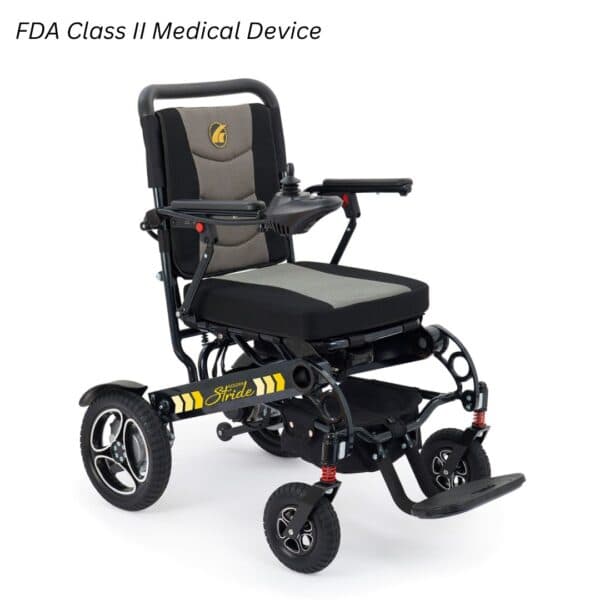
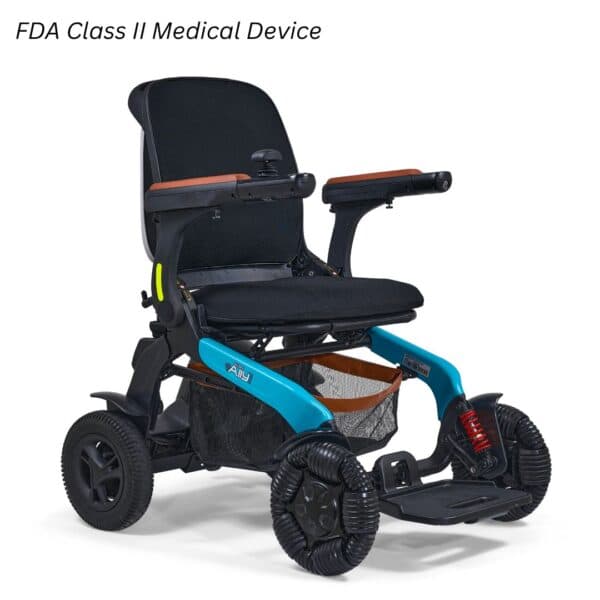
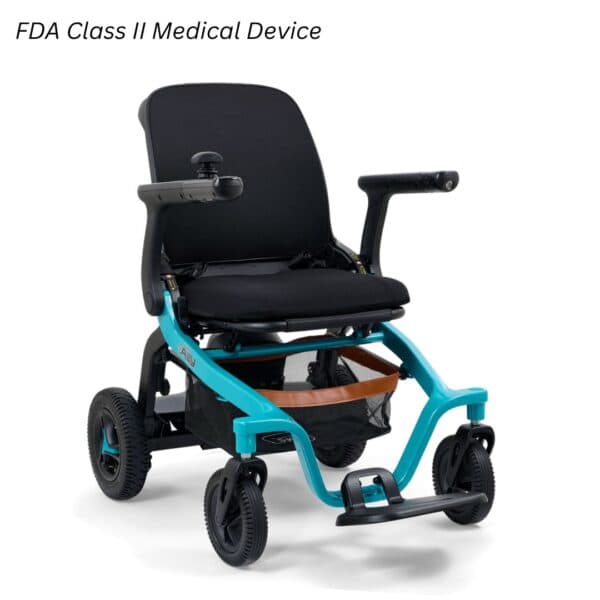
Portable and Folding Power Wheelchairs
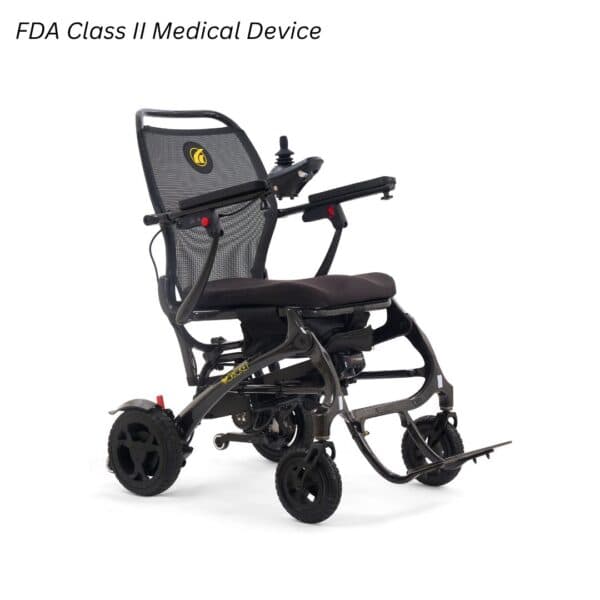
Portable power wheelchairs solve the biggest practical challenge of owning a power chair: getting it into and out of a vehicle without a lift.
What makes them different:
- Lightweight frames. Most portable power wheelchairs weigh 40-70 pounds, compared to 150-300 for standard models. This is achieved through aluminum or carbon fiber frames and smaller batteries.
- Folding designs. The chair folds laterally (side-to-side) into a compact profile similar to a folded manual wheelchair, fitting into most car trunks and overhead aircraft compartments.
- Quick setup. Unfold, power on, and go. No tools, no multi-piece assembly.
- Airline friendly. Models with lithium-ion batteries under FAA limits can travel as checked baggage on most airlines.
Portable power wheelchairs sacrifice several things for their compact size. Seats tend to be basic sling-style rather than padded captain's seats. Weight capacities usually max out at 250-300 pounds. Range is typically 8-15 miles per charge. Suspension is minimal, so rough terrain feels rougher. And they lack the advanced positioning features (tilt, recline, elevation) available on full-size chairs.
Best for: Travelers, people who use a power chair part-time, or anyone who needs to transport their chair in a standard vehicle regularly.
Heavy-Duty and Bariatric Power Wheelchairs
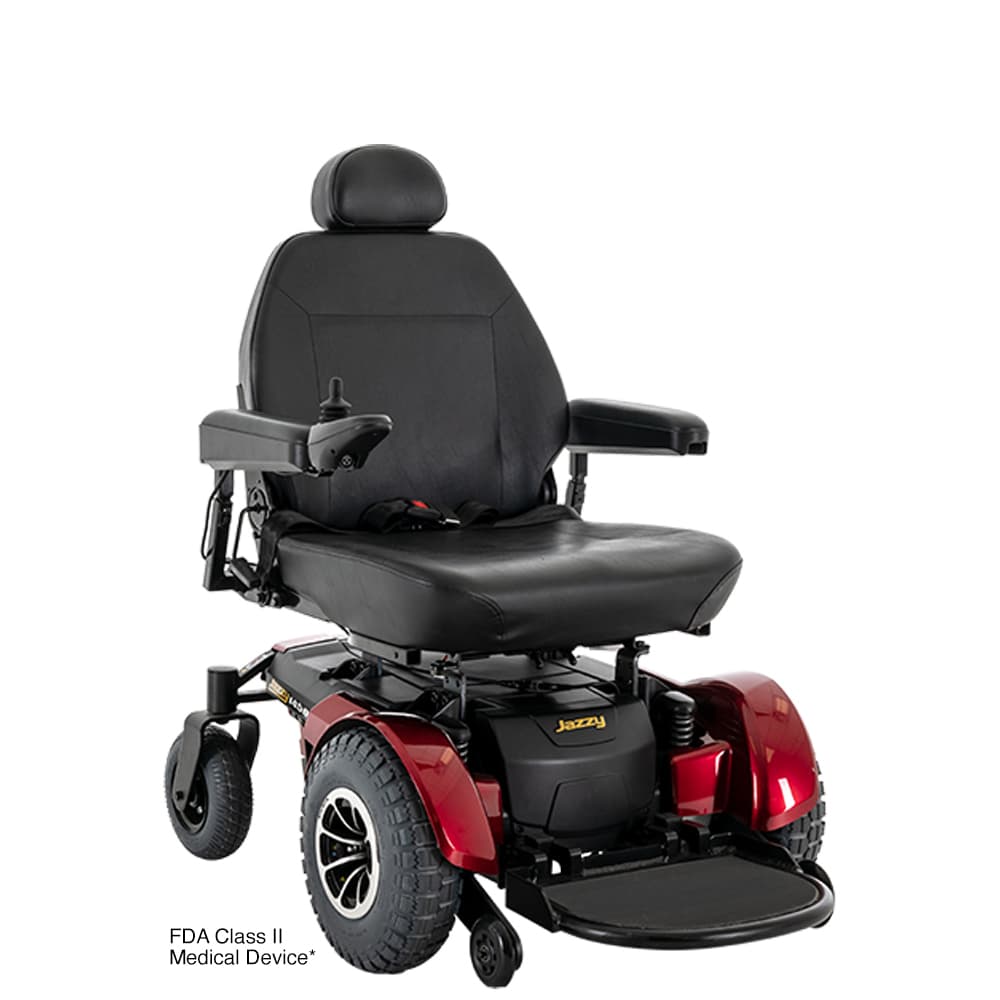
When standard power wheelchairs top out at 300-350 pounds, heavy-duty models pick up where they leave off -- typically supporting 400 to 600+ pounds.
What sets them apart:
- Reinforced frames. Wider, thicker steel or aluminum construction handles the increased load safely over years of daily use.
- Wider seats. Seat widths of 20-26 inches accommodate larger body types comfortably. Custom widths are available on many models.
- Stronger drive systems. Higher-torque motors and heavy-duty gearboxes maintain speed and climbing ability under greater loads.
- Larger batteries. Bigger battery packs compensate for the increased power demand, maintaining usable range (typically 10-18 miles per charge).
- Reinforced casters and tires. Heavy-duty wheels handle the additional stress without premature wear or failure.
Price range: Heavy-duty power wheelchairs typically start around $3,500 and can exceed $8,000 for high-capacity models with advanced features. Insurance and Medicare may cover a significant portion when medical necessity is documented.
Elevating Power Wheelchairs
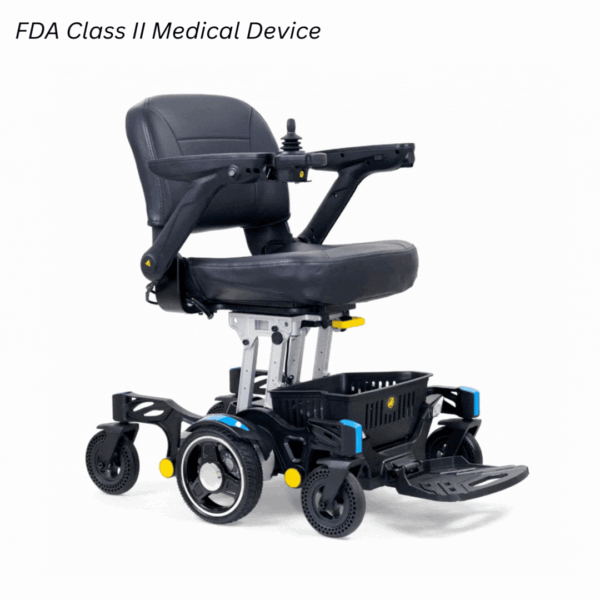
Elevating power wheelchairs feature a seat that rises 6-12 inches above the standard seated height, controlled by a button or switch on the armrest.
Why elevation matters:
- Reaching. Kitchen counters, store shelves, ATMs, and office desks are designed for standing height. A standard wheelchair puts you below counter level for most interactions. An elevating seat closes that gap.
- Eye-level interaction. Conversations feel different when you are at eye level with the people around you. For social situations, work meetings, and family gatherings, this makes a real difference in comfort and connection.
- Functional transfers. Elevating to a higher position can make transfers to beds, toilets, and vehicle seats easier and safer by reducing the height difference.
- Pressure relief. Changing your seated height shifts pressure distribution, which can benefit skin health during long days in the chair.
Important considerations: Elevating seats add weight, cost, and complexity. The chair will be heavier and taller when elevated, which affects vehicle transport and doorway clearance. Prices for elevating power wheelchairs typically start around $4,000 and range significantly higher depending on the base chair and additional features.
Power Wheelchair Accessories
The right accessories make a power wheelchair more comfortable, practical, and suited to your daily routine.
Seating and comfort:
- Pressure-relieving cushions (gel, air, or foam) are essential for anyone spending extended time in the chair. A good cushion prevents skin breakdown and improves comfort dramatically.
- Back cushions and lumbar supports improve posture and reduce fatigue.
- Headrests are available for chairs that support them, important for riders who need head and neck support.
Convenience:
- Armrest-mounted bags and pouches keep essentials within reach.
- Cup holders, phone mounts, and tablet holders keep you connected on the go.
- Trays that mount across the armrests create a work surface for eating, writing, or using a laptop.
Safety and visibility:
- Flag poles and pennants increase visibility in parking lots and on sidewalks.
- LED lighting kits improve safety for early morning or evening use.
- Rearview mirrors help with backing up and spatial awareness.
Weather protection:
- Canopies and umbrella holders provide sun and rain protection.
- Lap blankets and covers designed for wheelchairs keep you warm without tangling in wheels.
Power Wheelchair vs. Mobility Scooter
Power wheelchairs and mobility scooters both provide powered mobility, but they serve different needs.
Choose a power wheelchair when:
- You need all-day seating with good postural support.
- You have limited upper body strength or trunk stability.
- You need to navigate very tight indoor spaces (mid-wheel drive chairs have a tighter turning radius than any scooter).
- You need advanced positioning features like tilt, recline, or seat elevation.
- You cannot use a tiller-style steering column (scooters require two-handed steering; power chairs use a one-handed joystick).
Choose a mobility scooter when:
- You can walk short distances but need powered assistance for longer trips.
- You use the device primarily for errands, shopping, and outdoor activities rather than all-day seating.
- You transfer in and out of the device frequently throughout the day.
- You want a device that disassembles easily for car transport.
- You have good trunk stability and upper body control.
For a deeper look at scooter options, see our complete guide to mobility scooters for seniors.
Many people benefit from having both -- a power wheelchair for daily home use and a lightweight travel scooter for outings. Your healthcare provider and a qualified rehab specialist can help you evaluate which combination, if any, makes sense for your situation.
Medicare Coverage for Power Wheelchairs
Medicare Part B covers power wheelchairs as Durable Medical Equipment (DME) when they are medically necessary for in-home mobility.
Qualification requirements:
- A face-to-face examination with your physician who documents your mobility limitation and the medical necessity for a power wheelchair.
- A written prescription specifying a power-operated vehicle (POV) or power wheelchair.
- Documentation that less complex mobility devices (cane, walker, manual wheelchair) are insufficient for your needs.
- The power wheelchair must be needed for use in your home, not solely for outdoor or recreational activities.
- The supplier must be enrolled with Medicare.
Group 1 vs. Group 2 power wheelchairs: Medicare classifies power wheelchairs into groups based on features and capabilities. Group 1 chairs are basic models for straightforward mobility needs. Group 2 chairs offer more features (better suspension, programmable controls, higher weight capacities). The classification affects both what Medicare approves and how much it pays.
Complex rehab power wheelchairs (CRT): If you need specialized seating, alternative drive controls, or advanced positioning features (power tilt, recline, seat elevation), you may qualify for a Complex Rehab Technology (CRT) power wheelchair. CRT chairs require evaluation by a qualified rehab professional and follow a separate Medicare approval process with higher coverage limits.
Processing time: Medicare power wheelchair approvals typically take several weeks. Some claims may require prior authorization. Work with an experienced DME supplier who handles Medicare documentation regularly to avoid delays and denials.
Finding the Right Power Wheelchair
The right power wheelchair fits your body, your daily routine, and your environment. It should feel like a natural extension of your independence -- not a compromise you tolerate.
If you are exploring power wheelchair options for yourself or someone you care for, start with an honest assessment of daily needs. Talk to your healthcare provider about what features are medically appropriate. And work with a supplier who can match you to the right chair rather than simply the most expensive one.
Cerigra carries a full range of standard, portable, heavy-duty, and elevating power wheelchairs from trusted manufacturers. Our team can help you navigate options, sizing, and Medicare coverage.
Call us at (945) 378-5255 or explore our power wheelchair selection to get started.
Talk to an Expert
Price Match Guarantee
Find it lower? We'll match it
HSA/FSA Eligible
Tax-free healthcare spending