Get free delivery on orders over $100
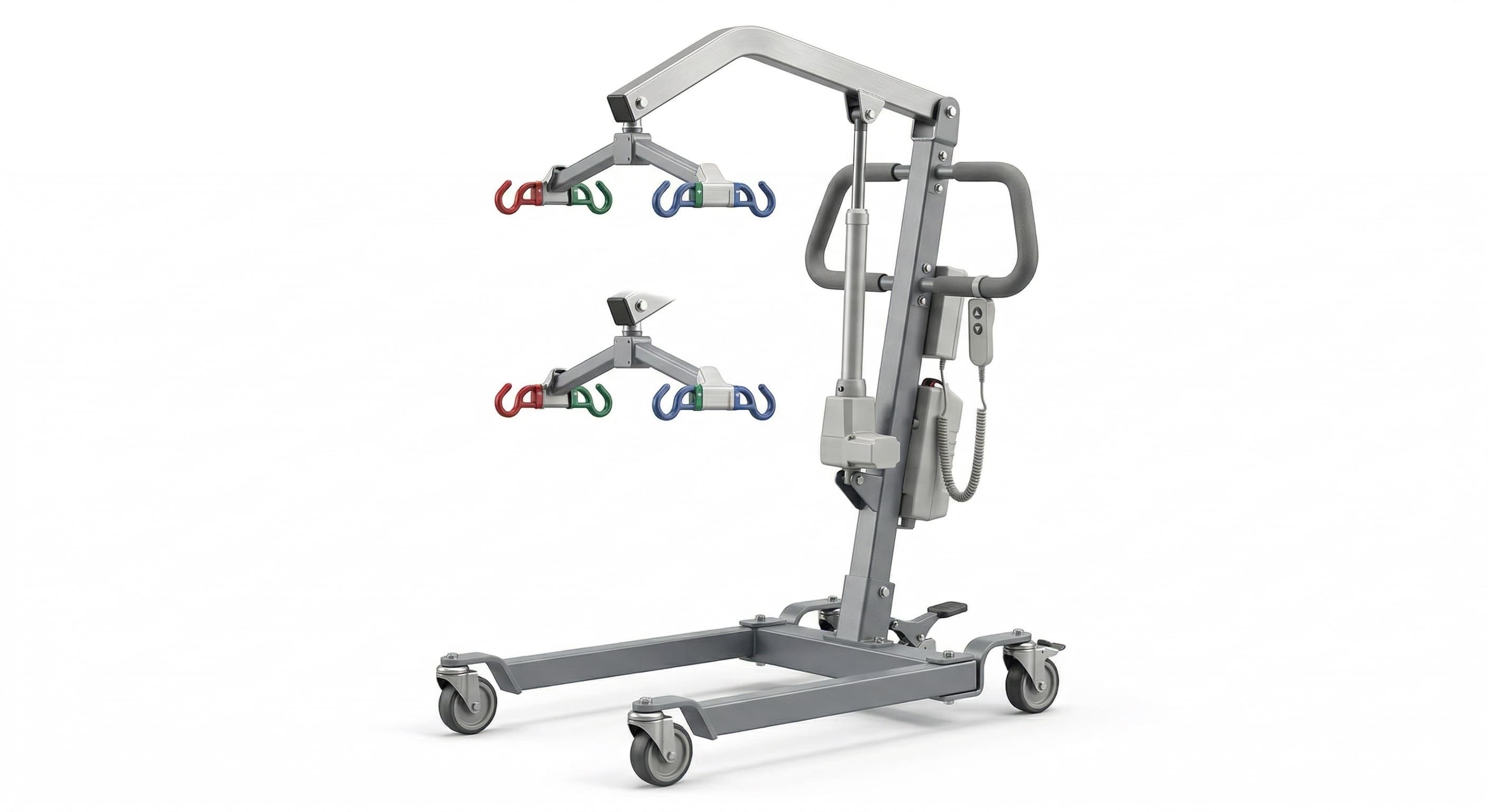
Patient Lifts
Patient lifts built for safety in the most sensitive care environments. Whether you are looking for a portable hydraulic lift for home use or a high-capacity electric model for professional-grade support, these systems are designed to protect both the user and the caregiver. From sit-to-stand aids to full-body sling lifts, each piece of equipment is chosen for smooth, stable operation and ease of maneuverability in confined spaces.
Filter Your Results:
0 resultsTransferring someone who cannot stand or bear weight on their own is one of the hardest parts of home caregiving. Moving a person from bed to wheelchair, wheelchair to toilet, or any surface to another puts enormous physical strain on caregivers and creates real injury risk for both people involved.
Patient lifts exist to solve this problem. They use mechanical or electrical power to do the heavy lifting, making transfers safer, smoother, and sustainable over the long term. For families providing care at home, a patient lift is often the piece of equipment that makes the difference between manageable caregiving and caregiver burnout or injury.
But patient lifts come in several types, and the right one depends on the person's mobility level, the types of transfers you need to perform, your home layout, and your budget. This guide covers every major category so you can make a confident choice.
Which Patient Lift Is Right for Your Situation?
The single most important factor is how much weight the person can bear on their own legs.
- No weight-bearing ability: The person cannot stand or support any of their own weight. You need a full-body patient lift (Hoyer-style) that lifts them completely off the surface using a sling.
- Partial weight-bearing ability: The person can support some weight on their legs but cannot stand up independently. A sit-to-stand lift helps them through the sitting-to-standing motion while they bear partial weight.
- Frequent transfers throughout the day: If you are performing many transfers daily in a fixed path (bed to wheelchair, for example), a ceiling track lift provides the smoothest, least physically demanding option for both caregiver and rider.
- Caregiver strength and number. A single caregiver managing transfers alone benefits enormously from an electric lift. Two caregivers may be able to manage with a manual hydraulic lift for occasional transfers.
- Home layout. Floor-based lifts need clearance to roll under beds and around furniture. Ceiling lifts need structural support in the ceiling. Doorway widths matter for moving between rooms.
- Budget and insurance. Manual lifts cost significantly less than electric models. Medicare may cover part of the cost depending on medical necessity documentation.
Full-Body Patient Lifts (Hoyer-Style)
Full-body patient lifts -- commonly called Hoyer lifts after the brand that popularized them -- use a sling to cradle the person's entire body and lift them completely off the surface. The lift rolls on casters, allowing the caregiver to reposition the person and lower them onto a bed, wheelchair, commode, or bathing chair.
How they work: A fabric or mesh sling is placed under the person while they are lying down or seated. The sling attaches to a spreader bar (also called a cradle) suspended from the lift arm. The lift raises the spreader bar -- either by pumping a hydraulic handle (manual) or pressing a button (electric) -- lifting the person off the surface. The caregiver then rolls the lift to the destination and lowers the person.
Key features to evaluate:
- Weight capacity. Standard models support 400-450 pounds. Bariatric models go higher.
- Lift range. How high the lift arm reaches determines whether it can clear hospital bed rails, high mattresses, or bathtubs.
- Base width. Adjustable-width bases are essential. The legs need to spread wide enough to straddle a wheelchair or bed base, then narrow enough to fit through doorways.
- Caster quality. Smooth-rolling, locking casters make a real difference in daily use. Cheap casters fight you on carpet and make transfers harder.
Sit-to-Stand Lifts
Sit-to-stand lifts are designed for people who can bear partial weight on their legs but cannot stand up from a seated position independently. Instead of lifting the person entirely off the surface, the lift assists them through the sitting-to-standing motion.
How they work: The person sits at the edge of a surface (bed, chair, wheelchair) and places their feet on the lift's footplate. They hold onto a support bar or lean into a padded chest pad. The lift raises them to a standing position, at which point the caregiver can pivot them to the destination surface and lower them back to sitting.
Why they matter:
- Preserve leg strength. Because the person actively participates in the transfer, they maintain muscle engagement and weight-bearing ability.
- More dignified. Standing transfers feel more natural than being lifted in a sling.
- Faster transfers. Sit-to-stand transfers are quicker than full-body sling transfers once the person and caregiver develop a routine.
- Versatile. They work for bed, chair, wheelchair, toilet, and vehicle transfers.
For a detailed breakdown of types, top models, and safe use tips, read our complete guide to sit-to-stand lifts.
Ceiling Track Lifts
Ceiling track lifts are permanently installed systems that use an overhead track mounted to the ceiling (or a freestanding overhead frame). A motor unit travels along the track, and a sling attaches to the motor to lift and move the person.
How they work: A track is mounted to ceiling joists or structural supports along the desired transfer path -- typically from bed to bathroom, or from bed to a nearby wheelchair position. A powered motor unit clips onto the track and connects to a sling. The caregiver uses a hand control to raise, lower, and move the person along the track path.
Key advantages:
- No floor space required. Because the system is overhead, there is nothing on the floor to navigate around. This is a major benefit in small bedrooms and bathrooms.
- Smooth, consistent transfers. The track guides the path, so transfers feel smooth and predictable every time.
- Reduced caregiver effort. The caregiver only needs to guide the person and operate the control. There is no pushing, rolling, or maneuvering a floor-based lift.
- Multi-room systems. Tracks can run through doorways and connect rooms, creating a continuous transfer path from bedroom to bathroom, for example.
- Installation required. Ceiling lifts require professional installation. The ceiling must have adequate structural support (standard residential ceiling joists are often sufficient, but should be evaluated).
- Fixed path. The lift only travels along the track, so transfers are limited to the installed route.
- Cost. Ceiling lift systems (track, motor, slings, and installation) typically cost more than floor-based lifts. However, the long-term reduction in caregiver strain and speed of daily transfers often justifies the investment.
- Rental properties. Installation may not be permitted in rental homes. Freestanding overhead frames are an alternative but take up floor space and cost more.
Patient Lift Slings
The sling is arguably the most important component of any patient lift system. It is the interface between the person and the machine, and the wrong sling makes every transfer uncomfortable, insecure, or both.
Main sling types:
- Full-body slings support the person from shoulders to thighs. These are the standard choice for full-body Hoyer-style lifts and work for most transfers.
- U-shaped (toileting) slings leave an opening at the bottom, allowing the person to be lowered onto a toilet or commode without removing the sling. Essential if toileting transfers happen frequently.
- Stand-assist slings wrap around the torso or hips and are used with sit-to-stand lifts. They support the upper body while allowing the legs to bear weight.
- Bathing slings use mesh material that drains water, designed specifically for shower and bath transfers.
Material choices: Padded nylon is the most common for comfort and durability. Mesh versions are lighter and faster-drying, preferred for bathing. Some slings have a fleece liner for sensitive skin.
Compatibility: Not all slings work with all lifts. The attachment points (loops, clips, or hooks) must match the spreader bar on your lift. Always verify compatibility before purchasing replacement slings.
For detailed guidance on choosing and sizing slings, see our patient lift slings guide.
Manual vs. Electric Patient Lifts
Both manual and electric patient lifts get the job done. The choice comes down to caregiver effort, frequency of use, and budget.
Manual (hydraulic) patient lifts:
- How they work: The caregiver pumps a hydraulic handle to raise the lift arm, then releases a valve to lower it. Rolling and positioning the lift is manual.
- Cost: Significantly less expensive than electric models. A quality manual patient lift typically costs $400-$900.
- Pros: Lower upfront cost. No batteries to charge or replace. Simpler mechanism means fewer things that can break. Lighter overall weight.
- Cons: Pumping the hydraulic handle requires effort, especially at higher weight loads. Slower lift and lower cycles. The caregiver does more physical work per transfer.
- How they work: A rechargeable battery powers the lift motor. The caregiver presses a button on a hand pendant to raise and lower the lift arm. Rolling and positioning is still manual.
- Cost: Electric models typically cost $1,200-$3,500 depending on weight capacity and features.
- Pros: Minimal physical effort for lifting. Smoother, more controlled lift and lower movements. Faster transfers. Easier for a single caregiver to operate.
- Cons: Higher upfront cost. Batteries need regular charging (most last 20-40 lifts per charge). Heavier than manual equivalents. More complex mechanism to maintain.
- If you perform 1-2 transfers per day and have a second caregiver available, a manual lift may be sufficient and saves money.
- If you perform 4+ transfers per day, are the sole caregiver, or are caring for someone who weighs over 200 pounds, an electric lift is a worthwhile investment in your long-term physical health.
Bariatric Patient Lifts
Standard patient lifts typically support 400-450 pounds. Bariatric models are engineered for individuals who exceed that threshold, with weight capacities ranging from 500 to 700+ pounds.
What makes bariatric lifts different:
- Reinforced construction. Heavier-gauge steel, wider base legs, and stronger hydraulic or electric components handle the increased load safely.
- Wider spreader bars. Bariatric spreader bars are longer to accommodate wider slings without compressing the person's shoulders.
- Larger slings. Bariatric slings are wider and longer, providing adequate support and comfort for larger body types. Sizing is critical -- work with the manufacturer's measurement guide.
- Higher lift capacity motors. Electric bariatric lifts use more powerful motors to maintain smooth, controlled lifts at higher weights.
- Wider base adjustment. The base legs spread wider to straddle bariatric beds and wider wheelchairs.
Price range: Bariatric patient lifts typically cost $1,500-$4,000+ depending on whether they are manual or electric and the specific weight capacity.
Medicare Coverage for Patient Lifts
Medicare Part B may cover patient lifts as Durable Medical Equipment (DME) when medically necessary.
General requirements:
- A physician must document the medical necessity for a patient lift based on the person's functional limitations.
- The lift must be needed for transfers in the home (not a facility).
- The supplier must be enrolled with Medicare.
- A face-to-face examination and written prescription are required.
Rental vs. purchase: Medicare may cover patient lifts as a rental or a purchase depending on the equipment category and your supplier's approach. Rental payments typically apply toward an eventual purchase over a 13-month period.
Documentation tips: The more specific your physician's documentation, the smoother the approval process. Notes should describe the person's inability to transfer safely without a lift, the specific transfers needed (bed to wheelchair, etc.), and why less complex options are insufficient.
Work with a Medicare-enrolled DME supplier experienced in patient lift claims to navigate the documentation and approval process.
Making Transfers Safer at Home
A patient lift is not just equipment -- it is a commitment to safer, more dignified caregiving. The right lift protects the person being transferred from falls and skin injuries. It protects the caregiver from back injuries that can end their ability to provide care. And it makes daily routines more manageable so that home care remains sustainable.
Take time to evaluate your situation honestly. Consider the person's current mobility level and how it may change. Think about how many transfers happen each day and who performs them. And factor in your home layout -- doorway widths, bedroom space, bathroom access.
Cerigra carries full-body patient lifts, sit-to-stand lifts, slings, and accessories from trusted manufacturers. If you are not sure which type fits your situation, our team can help you work through the options.
Call us at (945) 378-5255 or browse our patient lift selection to find the right solution for your home.
Talk to an Expert
Price Match Guarantee
Find it lower? We'll match it
HSA/FSA Eligible
Tax-free healthcare spending