Get free delivery on orders over $100
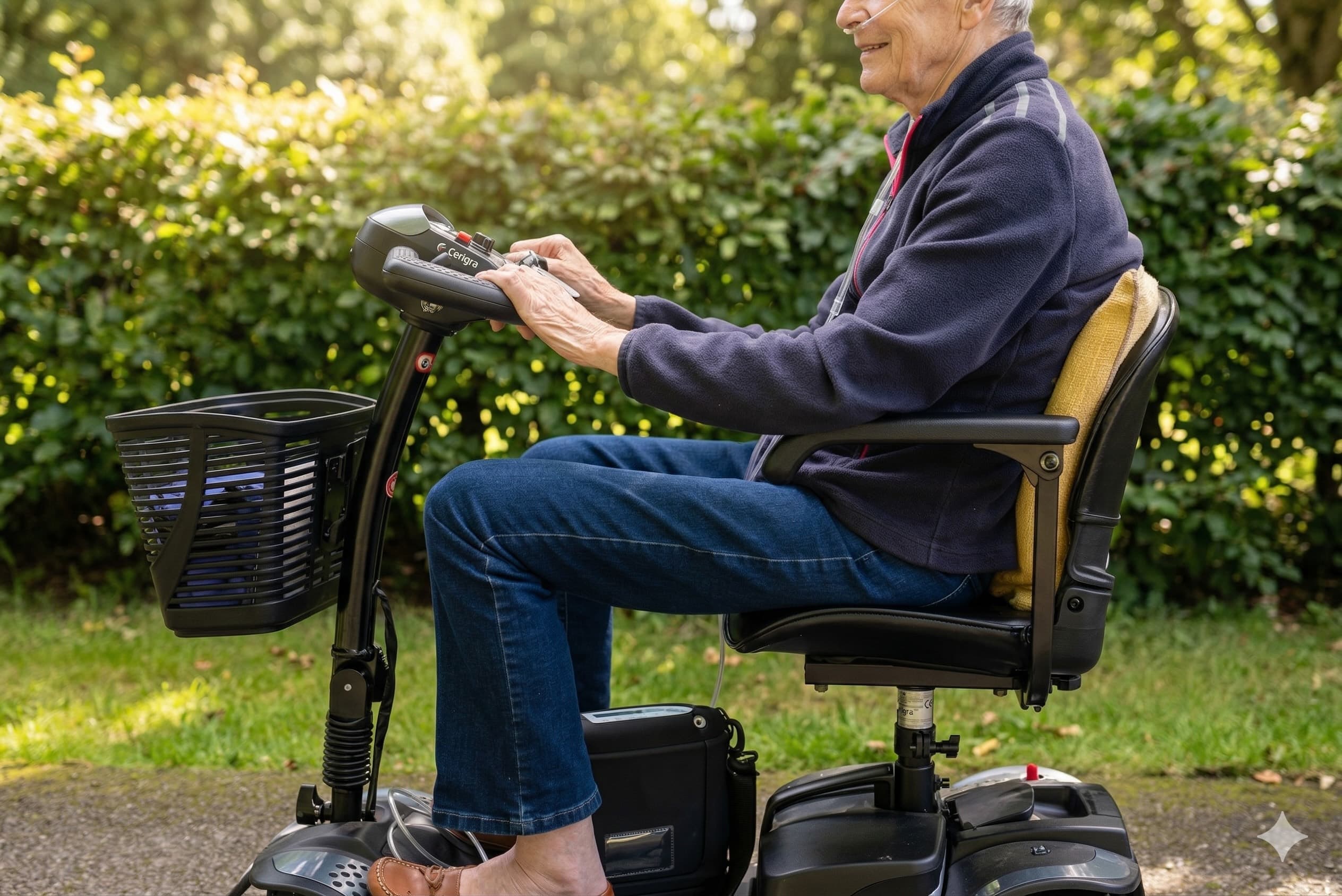
Mobility Scooters for Seniors: Types, Features, and How to Choose
A practical guide to choosing a mobility scooter — covering scooter types, 3-wheel vs. 4-wheel, key specs, top brands, pricing, and Medicare coverage.
Cerigra Team
A trip to the grocery store should not require a recovery period. Neither should walking from the parking lot to a doctor's appointment or getting around a grandchild's birthday party. When walking longer distances becomes painful, exhausting, or unsafe, a mobility scooter gives that independence back -- reliably and without relying on someone else to push a wheelchair.
But the category is wider than most people expect. Travel scooters that fold into a car trunk, full-size models built for outdoor terrain, lightweight options under 50 pounds, heavy-duty scooters rated for 500 pounds -- the right choice depends on where you will use it, how you will transport it, and what your body actually needs. This guide covers the main types, the specs that matter most, and what to expect on pricing and Medicare coverage so you can choose with confidence.
Types of Mobility Scooters
Mobility scooters fall into four broad categories. The differences come down to size, portability, and where you plan to use the scooter most.
Travel and Portable Scooters
Travel scooters are designed to come apart or fold for transport. Most disassemble into 4 or 5 pieces that fit in a car trunk, and the heaviest piece typically weighs 25 to 35 pounds. Some newer models fold in one piece and roll like a suitcase.
Best for: Seniors who need a scooter for errands, appointments, and trips away from home. If you drive or ride with someone who will load the scooter into a vehicle regularly, portability is the top priority.
What to expect: 3 or 4 wheels, weight capacities of 250 to 300 pounds, ranges of 8 to 15 miles per charge, and top speeds around 4 mph. Most travel scooters handle smooth indoor surfaces and flat outdoor pavement well but struggle with rough terrain, steep inclines, or thick grass.
Typical price range: $600 to $1,500 (as of early 2026; prices vary by brand and retailer).
Top models to consider: Pride Mobility Go-Go line, Golden Technologies Buzzaround series.
Mid-Size Scooters
Mid-size scooters split the difference between portability and capability. They are larger and more stable than travel models, with longer range, better suspension, and more comfortable seating -- but they are heavier and harder to transport without a vehicle lift.
Best for: Daily use around the neighborhood, shopping centers, and indoor spaces like large stores or community centers. If you plan to use your scooter as your primary way of getting around outside the house, a mid-size model offers the best balance of comfort and practicality.
What to expect: Almost always 4 wheels, weight capacities of 300 to 350 pounds, ranges of 15 to 20 miles per charge, and top speeds around 5 mph. Many mid-size scooters have adjustable tillers, padded captain's seats, and basic suspension. Total scooter weight is usually 100 to 150 pounds.
Typical price range: $1,000 to $2,000.
Full-Size and Heavy-Duty Scooters
Full-size scooters are built for extended outdoor use, longer distances, and higher weight capacities. Heavy-duty models in this category support 400 to 500 pounds or more and have reinforced frames, wider seats, and larger batteries.
Best for: Seniors who need a scooter that handles uneven sidewalks, gravel paths, inclines, and longer trips. Also the right category for larger individuals who need a higher weight capacity than standard models provide.
What to expect: 4 wheels, weight capacities of 350 to 500+ pounds, ranges of 18 to 25 miles per charge, and top speeds up to 6 mph or more. Full-size scooters often include full suspension, LED lighting, and larger pneumatic tires for outdoor terrain. These scooters are heavy -- typically 150 to 250 pounds -- and generally require a vehicle lift or trailer for transport.
Typical price range: $2,000 to $4,000+. Bariatric models with 500-pound capacities can run $3,000 to $5,500.
Folding Scooters
Folding scooters are a subset of travel scooters with one key difference: they fold into a compact shape in one motion instead of disassembling into separate pieces. Some fold automatically with the press of a button.
Best for: Seniors who travel frequently, fly commercially, or need the fastest possible pack-up for a car trunk. Folding scooters are popular among people who use their scooter intermittently rather than all day.
What to expect: Lightweight frames (often 45 to 60 pounds), ranges of 8 to 12 miles per charge, and weight capacities of 250 to 300 pounds. The compact fold is convenient but comes with trade-offs -- less suspension, smaller wheels, and less seat padding than standard travel scooters.
Typical price range: $800 to $2,000. Airline-approved lithium battery models tend to be at the higher end.
3-Wheel vs. 4-Wheel Scooters
This is one of the first decisions you will face, and it matters more than most buyers expect.
3-Wheel Scooters
A 3-wheel scooter has a single front wheel with a wider turning radius. The main advantage is maneuverability -- 3-wheel models can navigate tight hallways, crowded stores, and narrow doorways more easily than 4-wheel models. The turning radius is noticeably tighter.
Choose 3-wheel when: Indoor use is a priority, you need to navigate tight spaces at home or in stores, or you want a lighter scooter. Most travel scooters come in both configurations, but the 3-wheel version is almost always lighter and more maneuverable.
Trade-off: Less lateral stability. A 3-wheel scooter can tip more easily on uneven ground, slopes, or when turning at speed. This is not a safety concern on flat indoor surfaces, but it matters outdoors.
4-Wheel Scooters
A 4-wheel scooter offers a wider, more stable base. It handles uneven terrain, inclines, and outdoor surfaces more confidently.
Choose 4-wheel when: Outdoor use is the primary need, the rider weighs over 250 pounds, or stability on uneven ground matters more than tight indoor maneuverability.
Most mid-size and full-size scooters are 4-wheel by default. If you are unsure which to choose, 4-wheel is the safer bet for general everyday use.
What to Look for When Choosing a Mobility Scooter
Beyond the scooter type, these specs determine whether the scooter actually works for your daily life.
Weight Capacity
Every scooter has a rated weight capacity. Standard models typically support 250 to 300 pounds, mid-size models handle 300 to 350 pounds, and heavy-duty models go up to 500 pounds or more.
Choose a scooter rated at least 50 to 75 pounds above the rider's weight. Operating near the maximum capacity strains the motor, reduces battery range, and accelerates wear on the frame and tires.
Range Per Charge
Manufacturer-listed ranges assume flat terrain, ideal battery conditions, and a rider near the middle of the weight capacity. Real-world range is often shorter than advertised -- sometimes significantly so on hills, in cold weather, or with heavier riders.
If your typical daily use includes a 3-mile round trip to the store, a scooter rated for 10 miles gives you a comfortable margin. A scooter rated for only 8 miles will leave you anxious about running out of charge.
Portability and Disassembly
If you need to load the scooter into a car regularly, this matters as much as any other spec. Key questions:
- How many pieces does it break down into? Most travel scooters disassemble into 4 or 5 parts.
- What does the heaviest piece weigh? This determines whether you (or your caregiver) can realistically lift it. The heaviest piece is usually the battery pack or the rear section. Look for models where no single piece exceeds 30 to 35 pounds.
- Will it fit in your vehicle? Measure your trunk before you buy.
If disassembly is not practical, a vehicle-mounted scooter lift ($1,500 and up, depending on the lift type and vehicle) is the alternative. Full-size scooters almost always require a lift.
Terrain and Tires
- Solid tires are maintenance-free and fine for indoor use and smooth pavement.
- Pneumatic (air-filled) tires absorb bumps and handle outdoor terrain better but can puncture.
If you plan to use the scooter primarily outdoors or on uneven surfaces, pneumatic tires with suspension make a noticeable difference in ride quality.
Comfort Features
For scooters used daily, comfort matters for long-term satisfaction:
- Adjustable tiller: Lets you position the steering column at a comfortable angle for your arms and shoulders.
- Swivel seat: Makes mounting and dismounting easier, especially for seniors with limited hip mobility.
- Armrests and seat padding: Captain's seats with adjustable armrests are standard on mid-size and full-size models. Padding quality varies significantly by brand and price.
Price Ranges by Category
Prices below are approximate retail estimates as of early 2026. Actual pricing varies by dealer, configuration, and accessories.
| Category | Typical Price Range | Examples |
|---|---|---|
| Budget / basic travel | $350 - $600 | Vive Health, Drive Medical Scout, entry-level models |
| Travel / portable | $600 - $1,500 | Pride Go-Go Sport, Golden Buzzaround EX |
| Folding | $800 - $2,000 | Various airline-approved models |
| Mid-size | $1,000 - $2,000 | Pride Victory, Golden Companion |
| Full-size | $2,000 - $4,000 | Pride Pursuit, Golden Patriot |
| Heavy-duty / bariatric | $3,000 - $5,500+ | Models rated 400-500+ lbs |
Budget models under $500 exist, but they typically come with shorter warranties, lower weight capacities, and less durable construction. For daily use, investing in a recognized brand with warranty support and replacement parts availability is worth the higher initial cost.
Top Brands Worth Considering
Three brands consistently appear at the top of dealer recommendations and customer reviews for mobility scooters.
Pride Mobility
Pride's Go-Go line is one of the most popular travel scooter series in the United States. Their Victory and Pursuit lines cover mid-size and full-size needs. Pride is a Pennsylvania-based manufacturer with a strong dealer network and widely available replacement parts.
Golden Technologies
Golden's Buzzaround series competes directly with Pride's Go-Go line in the travel category, and their Companion and Patriot models cover mid-size and full-size segments. Golden manufactures in Pennsylvania and is known for long-term build quality.
Hoveround
Hoveround has a recognizable brand presence and sells both scooters and power wheelchairs directly to consumers. Their models tend toward the mid-range, and their direct-sales process includes telehealth mobility evaluations and White Glove in-home delivery and setup.
Other reputable brands include Zip'r Mobility, Vive Health, and Drive Medical, particularly in the travel and budget segments.
Medicare and Insurance Coverage
Medicare Part B can cover a mobility scooter as durable medical equipment (DME) when a physician certifies it as medically necessary. The general requirements:
- Medical necessity: Your doctor must document that you have a mobility limitation that prevents you from performing daily activities in your home, and that a scooter is the least costly alternative that meets your needs.
- Face-to-face exam: A qualifying face-to-face examination with your physician is required within a specific timeframe before the order is written.
- DME supplier: You must purchase or rent through a Medicare-enrolled DME supplier.
When approved, Medicare typically covers 80 percent of the approved amount after your Part B deductible. Your remaining 20 percent coinsurance -- plus any amount above Medicare's approved price -- is your responsibility.
Important caveats: Medicare may determine that a power wheelchair is more appropriate than a scooter depending on your specific limitations. The approval process involves documentation and can take several weeks. Not all scooters qualify -- check with your DME supplier before purchasing. If you have a Medicare Advantage plan, coverage details may differ from Original Medicare.
Some Medicaid programs, VA benefits, and private insurance plans also cover mobility scooters. It is worth calling your plan directly to ask what documentation they require.
Where to Buy a Mobility Scooter
DME Dealers
Local durable medical equipment dealers offer in-person fitting, test drives, and help with Medicare paperwork. You can search Medicare's supplier directory to find enrolled DME dealers in your area. This is the best option if you plan to use insurance benefits.
Online Retailers
Buying online often means lower prices and wider selection, but you lose the ability to test the scooter before purchase. If you buy online, confirm the return policy -- mobility scooters are large items and some retailers charge restocking fees or do not accept returns on used units.
Manufacturer Direct
Some brands sell directly to consumers through their websites. Hoveround, for example, has a direct-sales model with telehealth evaluations and in-home delivery. Pride Mobility and Golden Technologies primarily sell through their dealer networks.
Regardless of where you buy, confirm warranty coverage, replacement parts availability, and whether the seller handles Medicare billing if applicable.
Frequently Asked Questions
Does Medicare pay for mobility scooters?
Medicare Part B can cover a mobility scooter as durable medical equipment when your doctor certifies it as medically necessary. Medicare typically pays 80 percent of the approved amount after your annual deductible, and you pay the remaining 20 percent. You must purchase through a Medicare-enrolled supplier, and a face-to-face physician exam is required before the order. Coverage is not automatic -- documentation and approval can take several weeks.
Can seniors get a free mobility scooter?
A fully free scooter through Medicare alone is unlikely because of the 20 percent coinsurance. However, combining Medicare with Medigap, Medicaid, or VA benefits can reduce out-of-pocket costs significantly -- sometimes to zero. Some charitable organizations and state programs also offer assistance. Be cautious of "free scooter" advertising that oversimplifies the qualification and coverage process.
What is the difference between a mobility scooter and a power wheelchair?
A mobility scooter has a tiller (handlebar-style steering), a flat deck for your feet, and a captain's seat. It requires some upper body strength and hand dexterity to steer. A power wheelchair uses a joystick, supports the rider's full body, and is designed for people with more limited mobility or who cannot operate a tiller safely. Medicare may recommend one over the other based on your specific needs.
How fast do mobility scooters go?
Most mobility scooters for seniors have a top speed of 4 to 6 mph, depending on the model. Travel scooters are typically at the lower end (around 4 mph), while full-size models can reach 5 to 6 mph or slightly higher. Speed is adjustable on most scooters.
Can I take a mobility scooter on an airplane?
Yes, but the scooter must have a removable lithium-ion battery that meets FAA size and watt-hour limits, or a sealed lead-acid battery. Most folding scooters and some travel scooters are designed with airline travel in mind. Contact your airline before flying to confirm their specific requirements -- policies vary.
How long do mobility scooter batteries last?
A single charge typically lasts 8 to 25 miles depending on the scooter model, rider weight, terrain, and battery condition. The batteries themselves last 1 to 2 years with regular use before needing replacement. Replacement batteries cost $100 to $300 depending on the scooter.
Choosing the right mobility scooter starts with understanding where and how you will use it. A travel scooter that disassembles for your car is a different purchase than a full-size scooter for daily outdoor use -- and both are different from a folding model for air travel. Match the scooter to your real daily routine, not the most impressive spec sheet.
Cerigra carries travel and full-size mobility scooters from trusted brands. If you need help matching a scooter to your situation, explore Cerigra's mobility equipment or call our team at (945) 378-5255.