Get free delivery on orders over $100
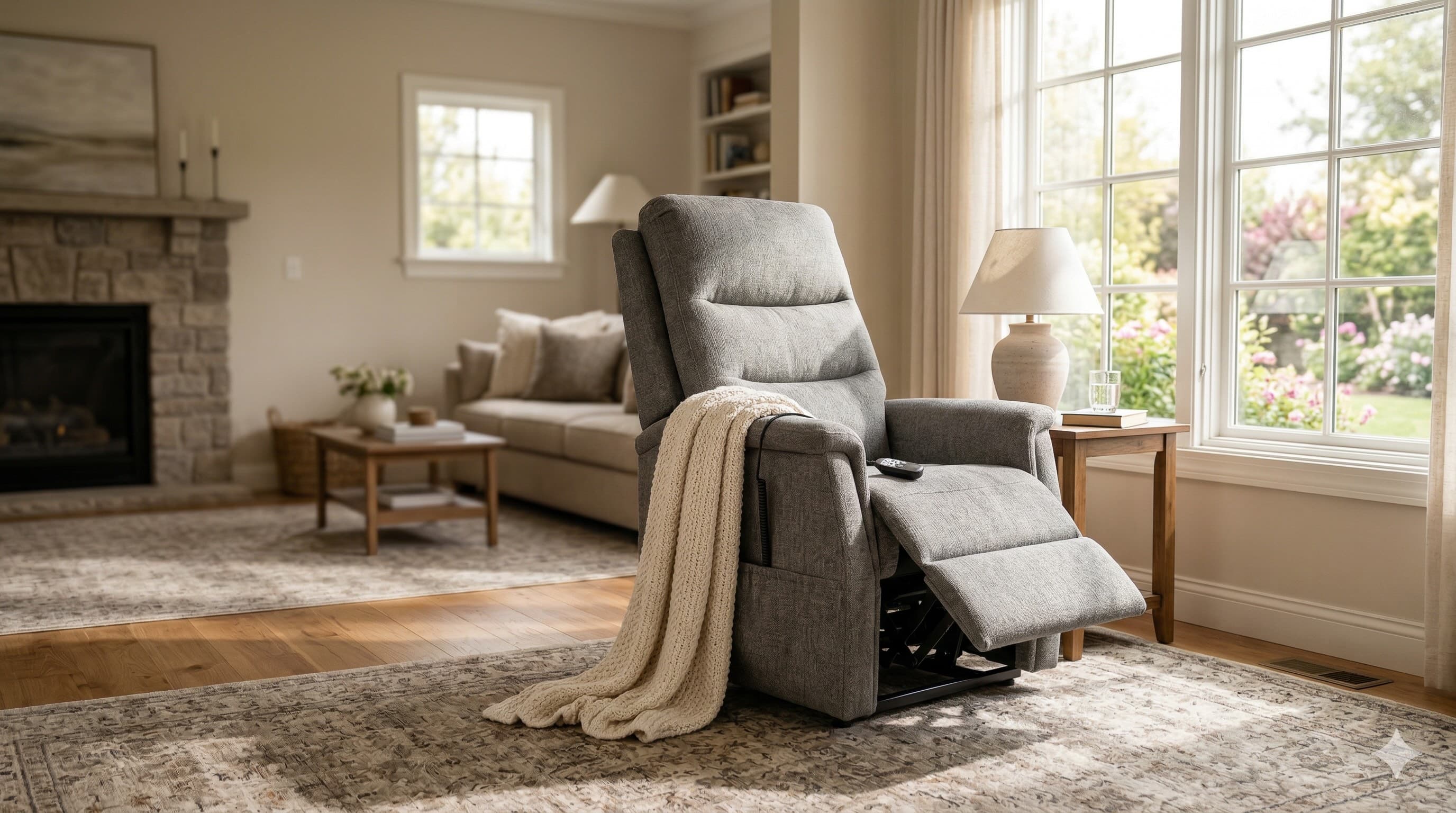
Lift Chairs for Seniors Covered by Medicare: What's Actually Paid For
Medicare Part B covers the lift mechanism in a power lift chair — not the chair itself. Here's exactly who qualifies, what's covered, and how to navigate the process.
Cerigra Team
Medicare does help pay for lift chairs -- but not the way most people expect. Under Medicare Part B, coverage applies only to the motorized lifting mechanism that helps you stand up. The seat, recliner, cushion, and upholstery? Those come out of your pocket.
That distinction matters because the lift mechanism is the least expensive part of the chair. Medicare's share typically covers a few hundred dollars of a chair that may cost $600 to $2,500 or more.
If you or a family member is researching how to get a lift chair through Medicare, this guide covers exactly what qualifies, the step-by-step claims process, realistic out-of-pocket costs, and other ways to close the gap.
What Medicare Actually Covers (and What It Doesn't)
Medicare classifies the lift mechanism as Durable Medical Equipment (DME) under Part B. Here is how the coverage breaks down:
What is covered:
- The motorized mechanism that tilts the chair base and seat forward to help you rise to a standing position
- 80% of the Medicare-approved amount for that mechanism, after you have met your Part B annual deductible
What is not covered:
- The chair seat, backrest, cushion, upholstery, or reclining features
- Heat, massage, or other comfort options
- Delivery or installation fees (varies by supplier)
- Any chair purchased from a supplier that is not enrolled in Medicare
In practical terms, Medicare treats a lift chair as two separate items: a medical device (the lift mechanism) and a piece of furniture (the chair). It pays toward the device. You pay for the furniture.
How Much Does Medicare Actually Pay?
The Medicare-approved amount for a seat lift mechanism typically falls in the range of approximately $300 to $400, depending on the specific mechanism and your region. After the Part B deductible, Medicare pays 80% of the approved amount. You pay the remaining 20% coinsurance.
A simplified example:
- Medicare-approved amount for the lift mechanism: $350
- Part B deductible: already met for the year
- Medicare pays: $280 (80% of $350)
- Your coinsurance: $70 (20% of $350)
- Cost of the full lift chair: $1,200
- Your real out-of-pocket cost: $920 (chair minus Medicare's $280 contribution)
If you have a Medicare Supplement (Medigap) plan, it may cover the 20% coinsurance, bringing Medicare's effective share up to the full approved amount for the mechanism. But you still pay for the chair itself.
Who Qualifies for a Medicare-Covered Lift Chair
Not everyone with difficulty standing is automatically eligible. Medicare requires a specific set of medical criteria, documented by your doctor.
You must have one of the following conditions:
- Severe arthritis of the hip or knee
- A muscular dystrophy or other neuromuscular disease
The lift mechanism must also be part of your physician's treatment plan and expected to improve or stabilize your condition.
And you must meet both of these functional requirements:
- You are completely unable to stand up from a regular armchair or any chair in your home
- Once standing, you are able to walk -- with or without a mobility aid like a cane or walker
That second point catches people off guard. If you cannot walk at all after standing, Medicare considers a patient lift or wheelchair more appropriate than a lift chair. The lift chair benefit is specifically for people who can get around once they are upright but need mechanical help getting there.
Important caveat: Conditions like general back pain, age-related weakness, or post-surgical recovery do not automatically qualify, even if standing is difficult. The qualifying diagnosis must be documented by your treating physician. Always consult your healthcare provider to determine whether your specific situation meets Medicare's criteria.
How to Get a Lift Chair Through Medicare: Step by Step
The process involves your doctor, a specific Medicare form, and a Medicare-enrolled DME supplier. Here is what to expect.
Step 1: Get a Medical Evaluation From Your Doctor
Schedule a visit with your treating physician -- not a chiropractor or a specialist you have not seen before. Your doctor needs to evaluate your condition and confirm that a seat lift mechanism is medically necessary for your specific diagnosis.
Step 2: Obtain a Prescription and Certificate of Medical Necessity
Your doctor must write a prescription for a seat lift mechanism and complete Form CMS-849, the Certificate of Medical Necessity for Seat Lift Mechanisms. This form documents your diagnosis, functional limitations, and the medical justification for the device.
The CMS-849 is the single most important document in the process. Without it, the claim will be denied. Make sure your doctor fills it out completely -- incomplete forms are a common reason for delays.
Step 3: Find a Medicare-Enrolled DME Supplier
You must purchase the lift chair from a supplier that is enrolled in the Medicare program. If you buy from a non-enrolled retailer, Medicare will not reimburse any portion of the cost, even if you have a valid prescription.
You can search for enrolled DME suppliers in your area through Medicare's supplier directory.
Step 4: Place Your Order and Submit the Claim
Work with your DME supplier to select a lift chair and place the order. The supplier typically handles the Medicare billing process on your behalf. They will submit Form CMS-849, the prescription, and the claim to Medicare.
Some suppliers may ask you to pay the full amount upfront and handle the reimbursement, while others bill Medicare directly for the mechanism portion. Ask about billing procedures before committing.
Step 5: Receive the Chair and Pay Your Share
Once the claim is processed, Medicare pays its portion (80% of the approved amount for the lift mechanism) to the supplier. You pay the remaining 20% coinsurance on the mechanism, plus the full cost of the chair itself.
Keep all receipts, the CMS-849 copy, and your Medicare Summary Notice for your records.
Medicare Advantage: Different Rules, Potentially Better Coverage
If you have a Medicare Advantage plan (Part C) instead of Original Medicare, your lift chair coverage may look different. Medicare Advantage plans must cover at least everything Original Medicare covers, but many offer additional DME benefits.
Some Medicare Advantage plans:
- Cover a larger portion of the lift mechanism cost
- Include the chair portion under supplemental DME benefits
- Have different supplier networks and copay structures
- Require prior authorization before purchase
Contact your Medicare Advantage plan directly to ask what their specific coverage is for power lift chairs. Get the answer in writing before purchasing.
Other Ways to Help Pay for a Lift Chair
Since Medicare's contribution is limited to the lift mechanism, most people pay a significant portion out of pocket. Here are other options worth exploring.
Medicaid
In some states, Medicaid covers lift chairs as DME when medically necessary. Coverage rules vary significantly by state. If you are dual-eligible (Medicare and Medicaid), Medicaid may pick up costs that Medicare does not, including the chair portion in some cases. Contact your state Medicaid office for details.
Veterans Affairs (VA) Benefits
Veterans enrolled in VA healthcare may be eligible for a lift chair through the VA's prosthetics and sensory aids program. The VA may cover some or all of the cost of a lift chair, not just the mechanism. Speak with your VA healthcare team or prosthetics department.
State and Local Assistance Programs
Some Area Agencies on Aging, nonprofit organizations, and community programs offer grants or low-interest loans for medical equipment. Availability varies widely, but your local Agency on Aging is a reasonable starting point.
Financing and Payment Plans
Many DME suppliers and lift chair retailers offer financing options or monthly payment plans that can make the out-of-pocket cost more manageable. Ask about 0% interest promotions before committing to a plan with interest.
Frequently Asked Questions
Does Medicare pay for lift chairs for seniors?
Yes, but only for the motorized lift mechanism -- not the chair, seat, or recliner portion. Coverage is through Medicare Part B, which pays 80% of the approved amount for the mechanism after your annual deductible.
How do I qualify for a Medicare-covered lift chair?
You need a documented diagnosis of severe arthritis of the hip or knee, or a neuromuscular disease. You must be unable to stand from a regular chair without mechanical assistance, and you must be able to walk once standing. Your doctor completes Form CMS-849 to certify medical necessity.
Does Medicare cover La-Z-Boy or brand-name lift chairs?
Medicare does not specify or restrict chair brands. The coverage applies to the lift mechanism regardless of the chair brand. You can purchase any power lift chair from a Medicare-enrolled supplier, but Medicare's payment applies only to the mechanism component.
How do I get a free lift chair?
A fully free lift chair through Medicare alone is unlikely because Medicare only covers the mechanism. However, veterans may be eligible for full coverage through VA benefits. Medicaid in some states may also cover additional costs. Combining Medicare with Medigap or Medicaid can significantly reduce out-of-pocket expenses.
How much does a lift chair cost out of pocket?
Power lift chairs typically range from $600 to $2,500 depending on size, features, and brand. After Medicare's contribution toward the lift mechanism (typically $250 to $350 after coinsurance), most buyers pay between $400 and $2,200 out of pocket for the complete chair.
A lift chair can make a meaningful difference in daily comfort and independence for seniors with arthritis or neuromuscular conditions. Understanding what Medicare covers -- and what it does not -- helps you plan the real cost before you buy.
If you have questions about choosing the right lift chair for your needs, our team is available at (945) 378-5255 to help you find the right fit.