Get free delivery on orders over $100
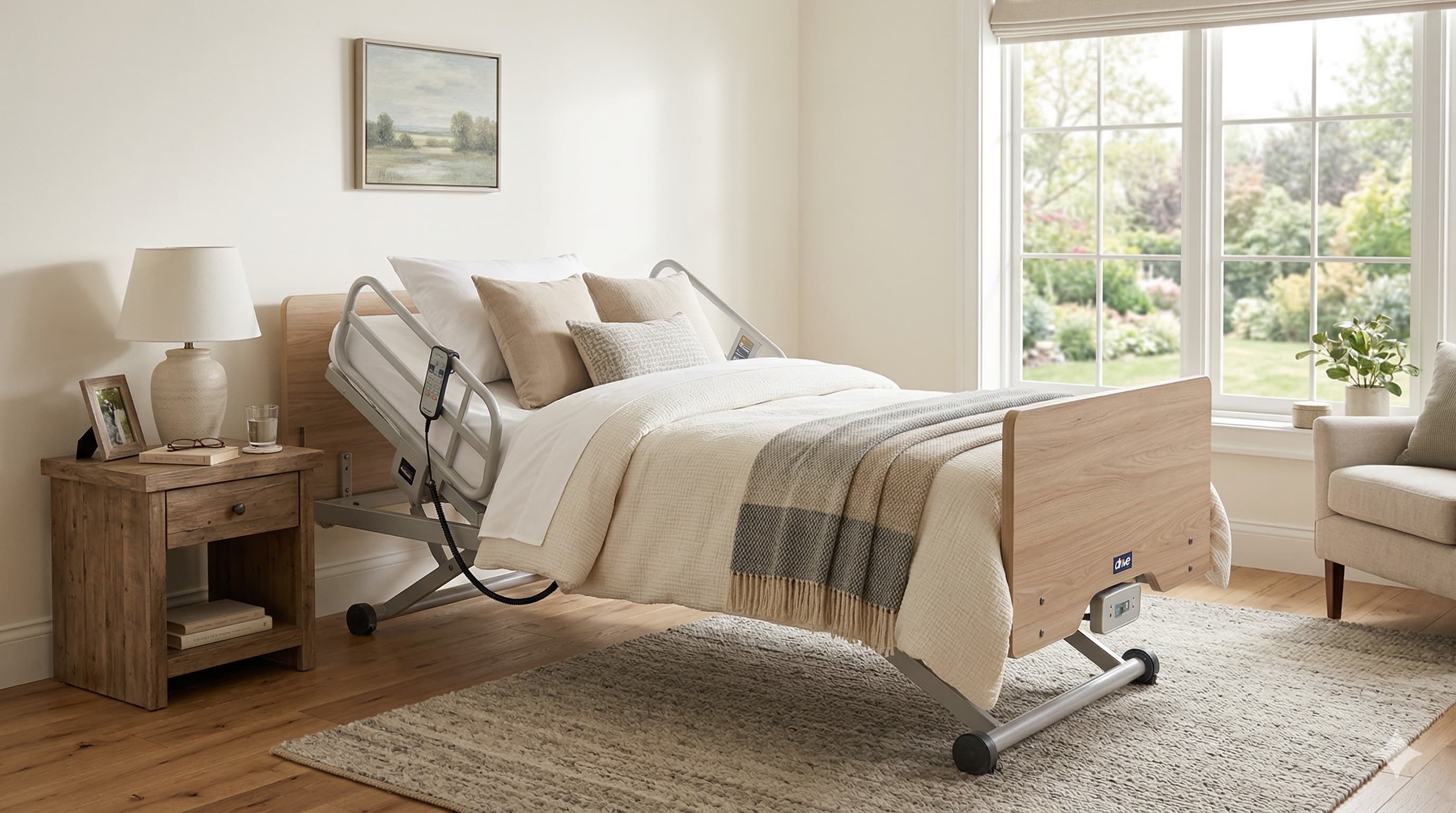
Best Hospital Beds for Home Use: A Practical Buying Guide
A guide to choosing the right hospital bed for home care — covering full-electric vs. semi-electric, key specs, top brands, and Medicare coverage.
Cerigra Team
When a parent or spouse needs a hospital bed at home, the decision usually comes under pressure. Someone just had surgery, a chronic condition is getting harder to manage, or a caregiver's back cannot take another night of trying to reposition someone on a flat mattress. You need a bed that is safe, comfortable, and realistic for your home -- and you need to choose without a clinical background.
This guide covers the three main types of hospital beds for home use, what actually matters when you compare them, and which features to prioritize based on your situation. Whether you are a senior setting up for a recovery or an adult child arranging care for a parent, the goal is the same: a bed that fits the room, supports the person, and makes daily care easier.
Types of Hospital Beds for Home Use
Hospital beds for home use fall into three categories. The differences come down to how the bed adjusts and who does the adjusting.
Full-Electric Hospital Beds
A full-electric hospital bed uses a motor to raise and lower the head section, the foot section, and the overall bed height. Everything is controlled with a hand pendant -- no cranking required.
Why it matters: If the person in the bed needs to adjust their own position (sitting up to eat, raising their legs for swelling), a full-electric bed lets them do it independently. For caregivers, the adjustable bed height is the critical feature. Raising the bed to waist level for wound care or repositioning, then lowering it close to the floor to reduce fall risk at night, saves significant physical strain.
Best for: Most home care situations. If you are choosing between electric and manual, full-electric is worth the investment unless budget is a hard constraint.
Typical price range: $1,000 to $3,000+ depending on features, weight capacity, and brand. Basic models without hi-low start closer to $800.
Semi-Electric Hospital Beds
Semi-electric beds use a motor for the head and foot sections but require a manual hand crank to adjust the overall bed height. You get powered positioning but fixed-height convenience.
Why it matters: These cost less than full-electric models and still cover the most common daily adjustments. The tradeoff is that caregivers cannot quickly raise or lower the bed frame without cranking, which matters most for transfers, bathing, and repositioning.
Best for: Situations where the person in the bed mainly needs positioning help (sitting up, elevating legs) but transfers in and out are manageable at a fixed height.
Typical price range: $500 to $1,500.
Manual Hospital Beds
Manual beds use hand cranks for all adjustments. They are the most affordable option and require no electricity.
Why it matters: Manual beds work in settings where power access is limited or where adjustments are infrequent. But they are impractical for anyone who lives alone or whose caregiver has limited strength. Every repositioning requires someone to crank.
Best for: Short-term recovery when adjustments are rare, or as a backup when cost is the primary constraint.
Typical price range: $400 to $800.
What to Look for When Choosing a Hospital Bed
Beyond the type of bed, these specs determine whether the bed actually works in your home and for your needs.
Weight Capacity
Standard hospital beds for home use typically support 350 to 450 pounds. If the person using the bed weighs more than 300 pounds, look at the rated capacity carefully -- and consider a bariatric model rated for 600 pounds or more. Weight capacity affects the frame, the motor, and the mattress deck, so this is not a spec you want to be close to the limit on.
Mattress Deck and Compatibility
The mattress deck is the surface the mattress sits on. Most home hospital beds use a spring deck or a solid platform. What matters is compatibility with the mattress you plan to use:
- Spring decks allow airflow underneath the mattress, which matters for pressure-relief mattresses (like alternating pressure or low-air-loss models commonly used for people at risk of pressure injuries).
- Solid platform decks are sturdier but restrict airflow.
If the person using the bed is at risk for pressure injuries, check whether the bed's deck works with the therapeutic mattress their healthcare provider recommends.
Bed Height Range
The distance from the floor to the top of the mattress deck determines two things: fall risk and caregiver ergonomics.
- Low position (7 to 10 inches): Designed to help reduce fall-related injury risk, especially for people who are restless at night or have cognitive issues.
- High position (20 to 30 inches): Lets caregivers work at a comfortable height for repositioning, wound care, or bathing.
Full-electric beds with a hi-low feature give you both. This is the single most useful feature for caregiving situations.
Side Rails
Most hospital beds come with half or full side rails. Half rails cover the head section and help with repositioning -- the person can grab the rail to turn over or sit up. Full rails run the length of the bed and add security but can also create entrapment risk if they do not meet current safety standards.
Check that any rails meet FDA guidance on hospital bed rail safety, and talk to a healthcare provider about whether full rails are appropriate. Many healthcare providers recommend half rails plus a low bed height as a safer combination than full rails for home care.
Room and Doorway Fit
Hospital beds are wider and longer than standard beds. Before you buy, measure:
- Doorways: Hospital bed frames typically measure 38 to 42 inches wide with rails down -- wider than the 36-inch mattress surface. Standard interior doorways are 30 to 32 inches, so you will likely need to remove the side rails and possibly the headboard for delivery and setup.
- Room clearance: Plan for at least 3 feet of clearance on the side where the caregiver will work, plus space at the foot of the bed for the motor housing if it extends beyond the frame.
- Mattress size: Most hospital bed mattresses are 36 inches wide and 80 inches long -- narrower than a twin XL. Standard home bedding will not fit well. Budget for a proper hospital bed mattress.
Ease of Use for Caregivers
If someone other than the person in the bed will be operating it daily, prioritize:
- A hand pendant with clearly labeled, intuitive controls
- A bed height range that goes low enough for safe transfers and high enough for caregiver comfort
- Lockable casters for stability during transfers
- A frame that allows a patient lift to roll underneath (if a lift is part of the care plan)
Best Hospital Beds by Category
Rather than ranking specific models that change with inventory and availability, here is what to look for in each common buying scenario -- and the features that separate a good choice from a regrettable one.
Best Overall: Full-Electric Hi-Low Bed
For most home care situations, a full-electric bed with hi-low functionality is the best investment. Models like the Invacare Full-Electric Home Care Bed and the Drive Medical Delta Ultra-Light are well-established options in this category. Look for:
- Height range from under 10 inches to at least 20 inches
- 450-pound weight capacity minimum
- Spring-style mattress deck for therapeutic mattress compatibility
- Half-length side rails included
- Emergency battery backup for the motor
- Quiet motor operation (important for nighttime adjustments)
This type of bed covers everything from post-surgical recovery to long-term home care. Expect to spend $1,200 to $2,500 for a quality model from established manufacturers. Specific models and availability vary, so check current listings before purchasing.
Best Budget Option: Semi-Electric Bed
If a full-electric bed is outside your budget, a semi-electric model with powered head and foot adjustment is a reasonable compromise. The Medline Medlite and Graham Field Patriot semi-electric lines are reliable, widely available options. Prioritize:
- Motor reliability (look for beds with at least a 1-year motor warranty)
- A hand crank that operates smoothly for height adjustment
- Compatible mattress deck
- Sturdy frame rated for at least 350 pounds
You can find reliable semi-electric beds in the $600 to $1,200 range. The savings are real, but keep in mind that the manual height adjustment adds physical work for caregivers over time.
Best for Bariatric Needs: Heavy-Duty Full-Electric Bed
For individuals over 350 pounds, a standard-capacity bed is not safe. Bariatric hospital beds are reinforced throughout -- frame, motor, deck, and rails. The Drive Medical Bariatric Full-Electric Bed and the Invacare BAR600 are purpose-built for this category. Look for:
- Weight capacity of 600 pounds or more
- A wider mattress deck (42 to 54 inches instead of the standard 36)
- Reinforced side rails rated for the same capacity
- A compatible bariatric mattress (standard mattresses will not provide adequate support)
Bariatric beds are a larger investment -- typically $2,000 to $5,000 -- but the structural integrity is not something to compromise on.
Best for Caregivers: Full-Electric Bed with Low Height and Lift Clearance
When a caregiver is doing most of the daily work, two features matter above all else: a very low floor height (under 10 inches) to reduce fall risk, and enough clearance under the bed frame for a patient lift to roll underneath. Beds like the Joerns UltraCare XT and Med-Mizer AllCare are designed specifically for intensive caregiving. Look for:
- Beds marketed as "hi-low" or "low bed" models
- A low position under 10 inches from floor to mattress deck surface
- At least 4 to 5 inches of ground clearance for lift access
- A durable hand pendant that can take daily use
These features reduce the physical toll on caregivers and make transfers safer for everyone involved.
Mattress Considerations
The bed frame is half the equation. A hospital bed without the right mattress is uncomfortable at best and inadequate for someone at risk of pressure injuries.
Innerspring mattresses are the most affordable and work fine for short-term recovery or for people who can reposition themselves regularly.
Foam mattresses (high-density therapeutic foam) offer better pressure distribution and are the most common choice for long-term home care.
Alternating pressure and low-air-loss mattresses are designed for people at high risk of pressure injuries. These require a compatible mattress deck with airflow -- confirm compatibility before purchasing.
A healthcare provider can help determine the right mattress type based on the individual's mobility level, skin integrity, and time spent in bed. If you are buying a bed and mattress separately, check the manufacturer's compatibility guidelines for both.
Medicare and Insurance Coverage
Medicare Part B may cover a hospital bed as durable medical equipment (DME) if a physician certifies it as medically necessary. In practice, this typically means:
- The person has a medical condition that requires positioning features a standard bed cannot provide
- A doctor writes an order specifying the medical need
- The bed is rented or purchased through a Medicare-approved DME supplier
Medicare generally covers semi-electric beds. Full-electric beds are covered only when there is a documented medical need for the electric height adjustment -- for example, if the person needs to change bed height frequently and cannot operate a manual crank.
Coverage varies by plan, and the out-of-pocket share depends on whether you have met your deductible. Contact your insurance provider or a Medicare-approved DME supplier directly to confirm what your plan covers before purchasing. Paying out of pocket gives you more choice in brands and features, but the cost difference can be significant.
Cerigra carries a range of full-electric and semi-electric hospital beds for home use. If you want help matching a bed to your situation, our team can walk you through the options at (945) 378-5255.
Frequently Asked Questions
What is the difference between a hospital bed and an adjustable bed?
Hospital beds are designed for medical care. They include features like side rails, IV pole mounts, a mattress deck compatible with therapeutic mattresses, and a height-adjustable frame that accommodates caregiving tasks. Adjustable beds (like those marketed for sleep comfort) raise the head and foot sections but typically lack the height adjustment, rails, weight capacity ratings, and medical-grade durability of a true hospital bed.
Can I use regular sheets on a hospital bed?
Standard sheets will not fit well. Hospital bed mattresses are typically 36 inches wide and 80 inches long, which is narrower than a twin and the same length as a twin XL. Look for sheets specifically sized for hospital beds, or use deep-pocket twin XL fitted sheets as a workable alternative.
How do I get a hospital bed delivered and set up?
Most home hospital beds ship in two or three boxes and require assembly. Some retailers include white-glove delivery and setup. If you are arranging care for a parent and will not be there for setup, confirm whether the retailer offers in-home assembly and bed placement -- it is worth the added cost to ensure the bed is configured safely.
Do I need a special mattress for a hospital bed?
Yes. Standard home mattresses are not designed for hospital bed frames and may not provide adequate pressure relief for someone who spends extended time in bed. At minimum, use a mattress designed for hospital bed dimensions. If the person using the bed has limited mobility or is at risk for skin breakdown, talk to their healthcare provider about a therapeutic mattress.